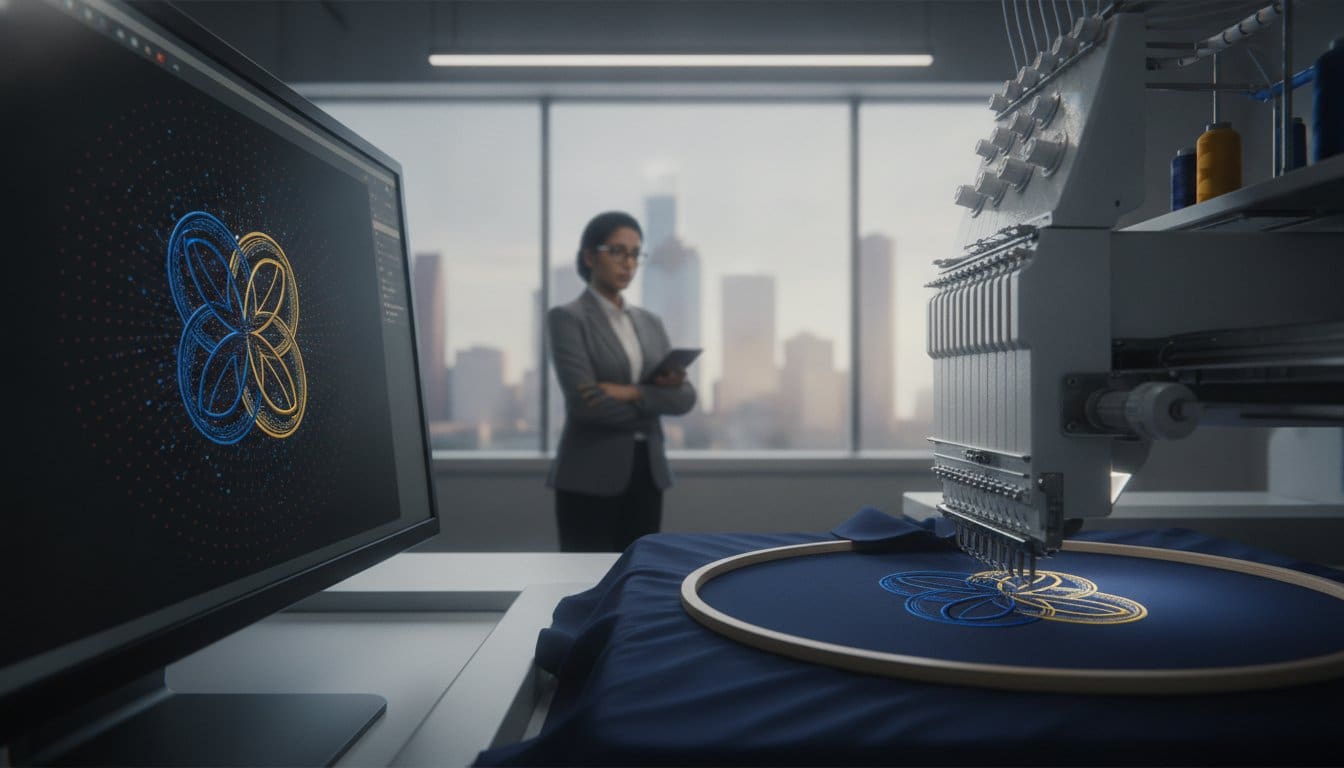
What is Embroidery Digitizing? The Essential Guide for 2026
Why can’t you just upload a JPEG and watch an embroidery machine go to work? It’s a common frustration for many business owners who see unexpected setup fees and wonder if their digital logo will actually translate to a physical garment. To find the answer, you have to look closer at what is embroidery digitizing. It isn’t just a file conversion; it’s the architectural blueprint that tells a needle exactly where to land, how deep to go, and which direction to pull. Without this map, even the most beautiful graphic becomes a tangled mess of thread.
We understand the hesitation that comes with technical jargon like stitch counts and density. You want your brand to look its best on every custom polo or bag you distribute. This guide will walk you through how your vision transforms into a professional thread masterpiece through the delicate art of digitizing. We’ll show you how to prepare your artwork to save time and why a professional touch ensures your logo looks sharp for years. By the end, you’ll feel confident choosing a local Houston embroidery partner who treats your project with the care of a true artisan.
Key Takeaways
- Learn exactly what is embroidery digitizing and why this technical bridge is the secret to turning a flat graphic into a textured work of art.
- Discover how professional pathing and stitch density prevent common issues like thread breaks or puckered fabric on your custom polos and hats.
- Save time and resources by understanding how to simplify your artwork for the needle, ensuring every small detail remains legible in thread.
- Realize the long-term value of a one-time digitizing fee that guarantees consistent, high-quality results for all your future branding needs.
- Find out how partnering with a dedicated Houston specialist transforms the production of personalized baby blankets and custom patches into a collaborative creative journey.
Understanding Embroidery Digitizing: Beyond the JPEG
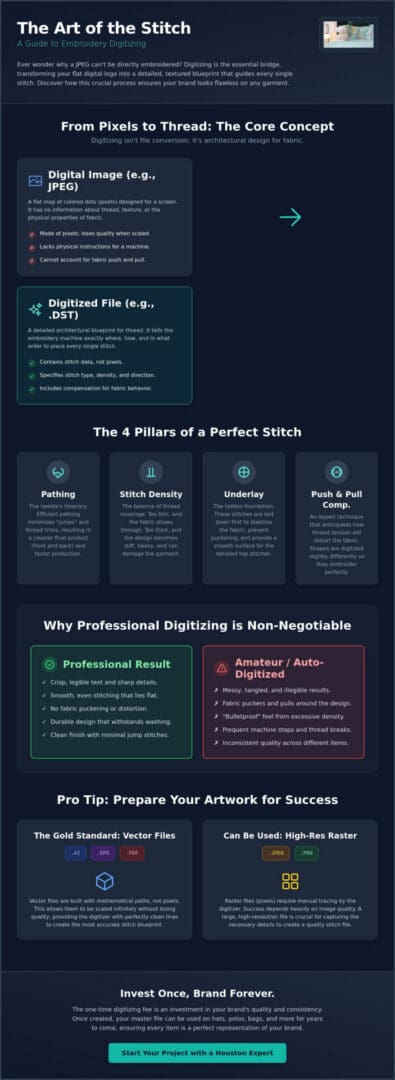
Most people assume that a computerized embroidery machine works exactly like a desk printer. It’s a natural mistake to make. However, you can’t simply click “print” on a JPEG and expect a custom polo to emerge with a crisp, professional logo. This is where the essential question arises: what is embroidery digitizing? At its heart, it’s the technical and creative bridge that translates your visual identity into a language of motion, tension, and physical texture. It’s the process of converting a flat digital image into a complex series of commands that guide a needle across fabric with absolute precision.
Digital images are composed of pixels, which are essentially tiny dots of light on a screen. Stitches are entirely different. They are physical loops of thread that have weight, direction, and a specific “push and pull” effect on the material. A professional digitizer doesn’t just trace your lines; they act as a translator. They interpret how those lines should be built with thread to ensure the design remains legible and vibrant. This translation is vital because thread behaves differently on a heavy canvas bag than it does on a soft baby blanket.
The Blueprint Analogy: Why Design is Architecture
Think of your logo as a dream home. A JPEG is a beautiful photograph of that house, but you can’t build a physical structure based on a photo alone. You need a blueprint. Professional digitizing provides that structural plan, detailing every “support beam” of underlay stitching and every “finish” of the top satin stitches. While some “auto-digitizing” tools exist in 2026, they often act like a house built without a foundation. They ignore how different fabrics react to needle penetrations. A skilled digitizer ensures that your design doesn’t pucker, shift, or tear the garment, preserving the integrity of your brand’s story through expert craftsmanship.
Common File Formats in 2026
To get the best results, the journey begins with the right starting point. Vector files like AI, EPS, or high-quality PDFs are the gold standard. These files can be scaled infinitely without losing clarity, providing the cleanest lines for the digitizer to follow. Once the process of what is embroidery digitizing is complete, the art is exported into machine-readable files. You’ll likely hear terms like .DST or .PES. These files contain the specific coordinates and stitch types required for the equipment to execute the design. For those new to the craft, Embroidery n Sewing offers a detailed look at how these digital patterns function. Even if you only have a high-resolution raster image, a professional can still work with it, though it requires more manual artistry to ensure every curve and corner is translated perfectly for the needle.
The Anatomy of a Digitized Design: How It Works
To truly grasp what is embroidery digitizing, you have to look beneath the surface of the finished product. It is a meticulous dance between physics and art. When a digitizer opens your file, they aren’t just looking at colors; they’re calculating the physical forces that will occur when a needle pierces fabric thousands of times. This technical foundation ensures that your brand’s story is told with clarity and durability. Several invisible factors determine whether a design looks professional or amateur once it hits the embroidery machine.
- Pathing: This is the needle’s itinerary. Efficient pathing minimizes “jumps” and thread trims, which keeps the back of the garment clean and prevents the machine from stopping unnecessarily.
- Stitch Density: This is the balance of thread in a specific area. If it’s too thin, the fabric peaks through; if it’s too thick, the design becomes a “bulletproof” slab that is uncomfortable to wear.
- Underlay: Think of this as the scaffolding. These invisible stitches are laid down first to attach the fabric to the stabilizer and provide a smooth surface for the top stitches to rest upon.
- Push and Pull Compensation: Fabric is dynamic. As thread is applied, it naturally pulls the fabric in and pushes it out. A master digitizer anticipates this movement, adjusting the digital shapes so they appear perfectly symmetrical in real life.
Understanding what is embroidery digitizing helps you see why professional expertise is non-negotiable for high-end results. If you’re curious about how your specific logo would translate to thread, collaborating with a boutique shop like Embroidery By Shotzy can provide the clarity you need to move forward with confidence.
Essential Stitch Types for Your Logo
Different parts of a design require different textures. Satin stitches are the glossy, column-like stitches used for text and borders, giving your custom polos a sophisticated finish. Fill stitches, or tatami stitches, cover large areas with solid color and can be programmed with unique patterns to add depth. For the finest details, such as the delicate accents on embroidered bags, run stitches provide a single line of thread that maintains legibility even at a small scale.
Material Matters: Digitizing for Different Fabrics
One of the biggest mistakes in the industry is using the same digitized file for every item. Fabric choice dictates the digitizing strategy. For instance, embroidered hats require a “center-out” pathing. This technique starts the needle in the middle and moves toward the sides to prevent the structured fabric from shifting or bunching.
On the other hand, personalized baby blankets require a much lighter touch. The stitch density must be lowered to maintain the blanket’s softness and “cuddle factor.” Conversely, items like custom patches or embroidered scrubs need a robust foundation to withstand heavy wear and industrial laundering. By tailoring the digital blueprint to the specific material, a digitizer ensures that your custom aprons or monogrammed towels look as beautiful after the fiftieth wash as they did on the first day.
Why Professional Digitizing is Worth the Investment
The “setup fee” is often the first hurdle a business owner encounters when ordering custom apparel. It’s easy to view this as just another line item on an invoice, but in reality, it’s an investment in the longevity and clarity of your brand. When you invest in understanding what is embroidery digitizing, you realize you aren’t just paying for a file. You’re paying for a technical asset. Once your logo is expertly digitized for a specific size, like a left-chest placement on custom polos, that file becomes a reusable blueprint. You only pay for that specific setup once, and it ensures every subsequent order maintains the exact same level of excellence.
Protecting your brand’s visual identity is about more than just color; it’s about legibility. Small text and intricate details are where amateur files fail. A professional digitizer knows how to manipulate thread to keep letters crisp and borders sharp, even when the design is scaled down. This meticulousness prevents the “thread bleed” that makes logos look blurry or unprofessional. Beyond aesthetics, a well-digitized file is a matter of machine efficiency. A file with messy pathing or incorrect tension settings causes frequent thread breaks. These interruptions don’t just slow down production; they create knots and “bird nests” on the back of the fabric that can eventually cause the stitches to unravel after just a few washes.
Manual Digitizing vs. Auto-Digitizing
In 2026, many online platforms offer “click-and-convert” auto-digitizing software. While these tools are fast, they lack the “Shotzy Touch” that comes from human intuition. An algorithm doesn’t understand how light reflects off a satin stitch. A human artisan, however, makes deliberate creative decisions about stitch direction to ensure your logo has a beautiful, three-dimensional sheen. Manual digitizing avoids the chaotic paths and unnecessary stitch clusters that automated tools produce, resulting in a cleaner finish on everything from embroidered hats to monogrammed towels.
Cost vs. Value in Custom Embroidery
It’s helpful to view digitizing as a form of insurance for your garments. High-quality digitizing saves you money by preventing ruined inventory. If a file is too dense for a delicate fabric, the needle can actually cut holes in the material, wasting expensive items like personalized baby blankets or high-end embroidered bags. The relationship between stitch count and the final labor fee is also more transparent with a professional file. A clean, efficient design reduces the total stitch count without sacrificing coverage, which can lower your production costs over the life of your brand. You aren’t just buying a digital file; you’re securing a partnership that values the physical reality of your vision.
Preparing Your Artwork for the Digitizing Process
Starting with a clear vision is the most effective way to ensure your finished project meets your expectations. While we’ve explored what is embroidery digitizing as a technical bridge, that bridge needs a solid foundation in the form of clean, thoughtful artwork. Preparing your files correctly doesn’t just save time; it ensures that the physical thread can replicate the beauty of your digital design without compromise. When you approach a project with the needle in mind, you’re already halfway to a masterpiece.
One of the most common challenges involves design complexity. Tiny gradients and micro-text that look perfect on a high-resolution screen often fail when translated into thread. Because thread has a physical thickness, trying to force too much detail into a small space leads to a “thread blob” that lacks definition. Similarly, digital HEX codes don’t always have a 1:1 match in the physical world. While we can get incredibly close, it’s helpful to choose high-contrast colors that will pop against the fabric of your custom polos or embroidered bags. High contrast ensures that your brand’s story remains visible even from a distance.
Size is another critical factor that influences the final outcome. A design digitized for the structured front of embroidered hats won’t behave the same way on a large, flat surface like a custom apron or the back of embroidered scrubs. Each size and material requires its own unique pathing and density adjustments to account for the way fabric moves. If you’re ready to see your brand come to life with professional precision, you can start your project with Embroidery By Shotzy today to ensure your artwork is optimized for the best possible results.
The “Golden Rules” for Embroidery Art
To ensure your logo remains legible and striking, follow these industry standards. First, keep your text height to at least 0.25 inches. Anything smaller risks the “holes” in letters like ‘e’ or ‘a’ closing up entirely during production. Avoid overly complex details like thin, overlapping lines that can cause needle breaks or fabric tearing. Finally, prioritize high-contrast designs. A dark navy thread on a black garment might look sleek on a monitor, but it will disappear in real-world lighting. This preparation phase is the final step in understanding what is embroidery digitizing before the machine takes over.
File Submission Checklist
- Step 1: Convert text to outlines. This prevents font substitution issues when we open your vector file, ensuring your brand’s unique typography remains intact.
- Step 2: Specify your desired dimensions. Don’t just say “small” or “large.” Provide exact width and height measurements so the digitizer knows the scale they are working with.
- Step 3: Note specific thread requirements. If your brand uses specific Pantone colors, let us know. We can match your digital identity to the closest physical thread spool available to maintain your professional legacy.
Partnering with a Houston Expert for Custom Embroidery
Choosing a local Houston partner changes the dynamic of your project from a simple transaction to a meaningful collaboration. When you work with a boutique shop like Embroidery By Shotzy, you gain access to artisans who treat your brand with the same care you do. We handle the technical heavy lifting of what is embroidery digitizing, ensuring that every stitch is optimized for the specific garment you’ve chosen. This local connection allows for a level of communication and personal investment that industrial, out-of-state manufacturers simply can’t match. You aren’t just a file in a queue; you’re a creative partner whose vision we are eager to bring to life.
A significant advantage of this local partnership is the opportunity to see and touch physical samples. While digital proofs are a standard part of the process, they can’t fully convey the three-dimensional impact of a finished piece. Reviewing a test stitch-out allows you to confirm that the colors are vibrant and the textures are exactly as you imagined. It’s a vital step in protecting your brand’s legacy, especially before a large production run of custom patches or monogrammed towels. Seeing the work in person provides a level of confidence that digital images alone cannot provide.
From Corporate Polos to Personalized Gifts
Our expertise goes beyond just understanding what is embroidery digitizing; it extends to how those designs live on different materials. We help you scale your brand across a diverse range of items. For the bustling Houston medical community, we provide the precision required for embroidered scrubs and professional uniforms that need to look sharp shift after shift. For corporate events, we ensure your logo looks prestigious on custom polos and embroidered bags. We also value the personal significance of custom work, creating lasting memories through personalized baby blankets and monogrammed gifts that serve as vessels for your family’s stories.
Start Your Creative Journey with Shotzy
At Embroidery By Shotzy, we are committed to exceptional craftsmanship and providing “Friendly Expert” guidance every step of the way. We believe that every project, whether it’s a dozen custom aprons for a new restaurant or a single personalized gift, deserves meticulous attention to detail. We make the process simple and transparent, from the initial artwork review to the final stitch. Our goal is to make sure you feel supported and inspired as we transform your ideas into a physical reality that you can be proud of.
Ready to see your logo in thread? Get a custom embroidery quote from Shotzy today!
Transforming Your Vision into a Thread Masterpiece
Understanding what is embroidery digitizing is the first step toward creating a lasting impression with your brand. You’ve seen how this technical blueprint moves beyond a simple image file to account for the physical pull of fabric and the direction of every thread. By prioritizing manual artistry over automated software, you ensure your logo remains crisp and professional through years of wear. It’s about more than just a setup fee; it’s an investment in a reusable asset that protects your visual identity.
Since 2014, our Houston-based artisanal workshop has specialized in high-stitch-count precision. We take pride in the meticulousness required to transform a digital concept into a tangible legacy. Whether you’re branding custom polos for a growing team or gifting personalized baby blankets, we bring a boutique-style approach to every project. We’re ready to act as your creative partner and guide you through the process with confidence and care.
Bring your brand to life with professional Houston embroidery—Request a quote!
Your story deserves to be told with excellence, and we’re here to help you stitch it into reality.
Frequently Asked Questions
How much does embroidery digitizing usually cost?
The cost is typically determined by the complexity of your design and the total stitch count required for a clean, professional finish. Most providers offer either a flat rate based on the logo’s placement, such as a left-chest or hat design, or a variable rate per thousand stitches. Investing in professional work ensures the file is optimized for your specific garment, which prevents wasted material and production delays.
Can I digitize a logo myself for free?
While free “auto-digitizing” software exists, these tools often produce chaotic stitch paths that can damage your garments or cause machine errors. True digitizing requires a human expert to make creative decisions about stitch direction and fabric tension. Attempting to use automated tools usually results in thread nests and a loss of detail that compromises your brand’s professional appearance on custom polos or bags.
How long does the digitizing process take?
A professional digitizing project typically takes between one to three business days depending on the intricacy of the artwork. This timeframe allows the artisan to manually plot the needle’s path and perform test stitch-outs to ensure everything looks perfect. Rushing this process can lead to overlooked technical details, so we prioritize meticulousness to guarantee a high-quality result for your custom apparel.
Will I need to pay a digitizing fee every time I order?
No, the digitizing fee is generally a one-time setup cost for a specific design at a specific size. Once we have created the digital blueprint for your logo, we keep it on file for all your future orders. This makes reordering items like embroidered hats or custom patches much more cost-effective since the technical heavy lifting has already been completed during your initial setup.
What is the best file format for embroidery digitizing?
High-quality vector files, such as AI, EPS, or PDF, are the ideal starting point for the digitizing process. These files provide clean, scalable lines that allow the digitizer to see every detail of your brand’s identity without pixelation. If you only have a raster image like a JPEG or PNG, ensure it is high-resolution to help the artist interpret the design accurately before they begin the manual conversion.
Can any picture be digitized for embroidery?
Most images can be digitized, but some designs require simplification to work effectively with physical thread. When asking what is embroidery digitizing, it’s helpful to remember that thread has physical volume and cannot replicate microscopic details or complex photographic gradients. We work with you to refine your artwork, ensuring it remains legible and striking when applied to items like embroidered scrubs or aprons.
What happens if I want to change the size of my digitized logo?
Significant size changes usually require the file to be re-digitized to maintain the correct stitch density and pathing. A file created for a small hat logo won’t have enough information to cover a large jacket back without looking sparse and unprofessional. We adjust the technical parameters for each new size to ensure the thread provides solid coverage and stays flat against the fabric without puckering.
Why does the stitch count matter for my embroidery price?
The stitch count directly impacts the time a machine spends running and the amount of thread consumed for your project. High-density designs with intricate details take longer to produce and require more resources than simple, open designs. Understanding what is embroidery digitizing helps you see why efficient pathing is so valuable, as it balances a rich, professional look with a production-friendly stitch count for your monogrammed towels or bags.