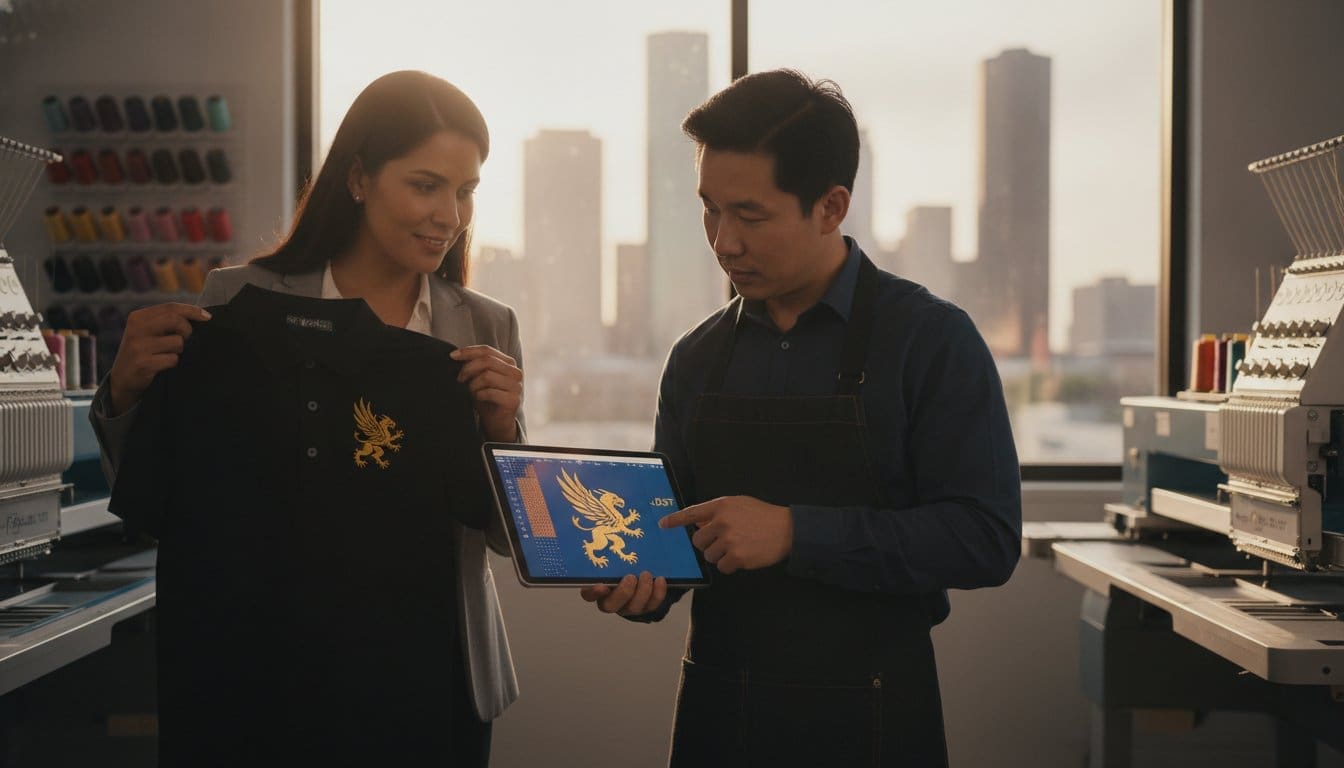
How to Migrate Your Embroidery Order to a New Shop
Your logo is the heartbeat of your brand, yet many businesses feel trapped by a vendor who treats their digitized files like a trade secret. If you’ve ever felt stuck with a shop that offers lackluster service just because they hold the keys to your design, you know how stifling that relationship can be. It’s frustrating to face redundant setup fees or the fear that your custom polos will look different when you migrate embroidery order from another shop. You shouldn’t have to choose between subpar craftsmanship and the “ransom” of a new setup cost just to get the quality you deserve.
We believe your brand’s story belongs to you. This guide shows you exactly how to transition your designs with total precision, ensuring your visual identity stays consistent while you gain the boutique level of care your project requires. You’ll learn how to handle industry standard files like .DST and .PES, how to avoid paying for work you’ve already commissioned, and the specific steps to take for a stress-free transition. We’ll walk through the technical requirements and communication strategies that turn a simple vendor change into a meaningful brand upgrade.
Key Takeaways
- Understand the vital role of digitized files like .DST and .PES to ensure your logo transfers with its original stitch precision.
- Discover the specific steps required to migrate embroidery order from another shop without incurring redundant setup fees or losing brand consistency.
- Learn how to prevent “color drift” through Pantone matching and high-resolution reference photos of your existing embroidered pieces.
- Follow a streamlined migration checklist that simplifies the technical handover and protects the integrity of your custom branding.
- Shift from a transactional vendor relationship to a boutique partnership that values meticulous craftsmanship and local collaboration.
Why Businesses Migrate Their Embroidery Orders
Switching vendors feels like a daunting hurdle, but staying with a provider who misses the mark is a slow drain on your brand’s prestige. Most organizations reach a tipping point where the convenience of an existing relationship no longer outweighs the frustration of subpar work. Whether it is a batch of custom polos with loose threads or a shipping delay that stalls a trade show rollout, these failures signal that your project is being treated as a task rather than a legacy. Your logo represents years of hard work; it deserves to be handled with the same respect you put into your business.
Choosing to migrate embroidery order from another shop is often a strategic decision to prioritize durability and visual impact. While high-volume online retailers rely on rigid automation, they frequently overlook the nuance required for complex digitized embroidery files. A boutique partner invests the time to ensure every stitch aligns with your original vision. This transition might require a small initial investment in communication, but the result is apparel that looks as professional on the hundredth wash as it did on the first day. At Shotzy, we focus on that long-term excellence, ensuring your brand stays sharp across every hat, bag, or apron we touch.
In Houston, a local partnership offers a level of creative investment that distant factories simply cannot match. You gain the ability to discuss the specific needs of your team with the person actually running the machines. This personalized collaboration ensures that your “one-time” digitizing fee truly results in a file that works perfectly across different materials, from structured hats to soft personalized baby blankets.
Common Red Flags with Your Current Provider
Identifying the need for change starts with observing the small details. If you notice inconsistent thread tension or “puckering” where the fabric bunches around the design, the machine calibration is likely off. Transparency is another factor. Hidden fees and vague bulk pricing structures often mask a lack of efficiency or care. Most importantly, if your emails go unanswered for days while your uniform rollout sits in limbo, your vendor has outgrown their ability to serve you with excellence. Reliable communication is just as vital as the stitch count itself.
The Value of a Boutique Embroidery Partner
A boutique approach transforms the production process into a collaboration. Instead of a faceless order portal, you get direct access to an artisan who understands the technical challenges of custom hats or professional scrubs. We focus on high-stitch-count precision to ensure your logo remains crisp and legible. This commitment to meticulousness means your brand’s excellence is reflected in every piece of gear your team wears. When you work with a specialist, you aren’t just another order number; you’re a partner in craftsmanship.
The Technical Handover: Digitized Files and DSTs
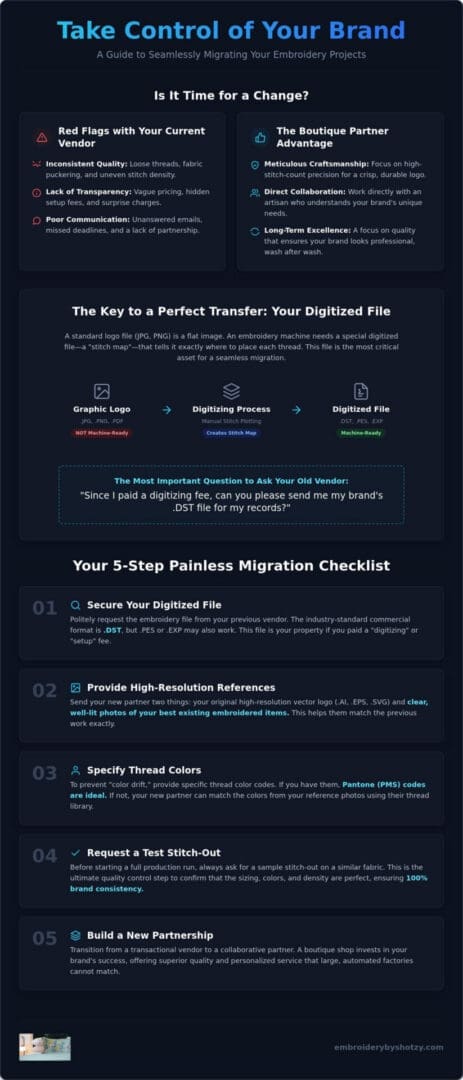
A common misconception when you migrate embroidery order from another shop is that a high-resolution logo is all you need to get started. In reality, a JPEG or PDF is just a flat image; to an embroidery machine, it is a mystery. A digitized file serves as the technical instruction manual. It tells the needles exactly where to drop, which thread density to use, and when to trim. Without this precise map, the machine has no way to translate your visual brand into physical stitches. High-quality thread work depends entirely on the quality of this data.
Most commercial machines speak a specific language, often found in embroidery file formats like .DST. While other types like .PES or .EXP exist for specific machine brands, the .DST is the industry standard for commercial production. One critical question to ask your previous vendor is whether you own the file or just paid for the setup service. Many shops charge a “digitizing fee” but consider the resulting file their intellectual property. If you paid for the creation of the file, you should technically have the right to request it for your archives. Knowing who owns the “manual” for your logo is the first step toward true brand independence.
Digitizing vs. Graphic Design
Digitizing is the technical bridge between art and thread. It isn’t just about tracing lines; it’s about understanding how fabric reacts to tension. Professional digitizers manually plot every path to prevent the “pull” and “push” that causes distortion. While “auto-digitizing” software exists, it often creates messy, inefficient paths that lead to thread breaks and uneven textures. High-quality custom patches or polos require that human touch to ensure the design remains crisp and legible across every garment.
How to Request Your Files from a Previous Shop
When you’re ready to move, send a polite, direct request to your former vendor. You might say: “We are updating our internal brand archives and would like the .DST files for our logo designs.” If a shop refuses to release them, don’t panic. Sometimes, a “fresh start” with a new digitizer is actually beneficial. If your old files were created years ago, modern software and techniques can often produce a cleaner, more durable result that better represents your current brand standards. A new file ensures your transition is built on a foundation of modern excellence.
Ensuring Consistency: Matching Thread and Quality
Maintaining a cohesive visual identity across a shifting manufacturing supply chain requires a keen eye for detail and a refusal to settle for “close enough.” When you migrate embroidery order from another shop, the most immediate risk is “color drift.” This happens because different vendors may use different thread manufacturers or even different dye lots of the same color. To combat this, we utilize Pantone matching to bridge the gap between your digital brand guidelines and physical spools of thread. This methodical approach ensures your logo looks as vibrant on a new batch of custom polos as it did on the originals.
Consistency isn’t just about color; it’s about the physical architecture of the stitch. We analyze the stitch density of your previous items to ensure the new production meets or exceeds those standards. A logo that looks “thin” or shows the underlying fabric is a sign of poor digitizing. To maintain crisp edges and prevent thread sinking into textured fabrics, we use specific stabilizers known as backing and topping. Backing provides the foundation behind the fabric, while topping is a temporary layer used during the process to keep stitches sitting proud on the surface, which is essential for items like monogrammed towels. The process to migrate embroidery order from another shop shouldn’t feel like a gamble; it should feel like a refinement of your brand.
Thread Brands and Color Charts
We rely on industry leading threads like Madeira and Isacord, known for their brilliant sheen and exceptional tensile strength. These brands offer thousands of shades, allowing us to find the precise match for your corporate palette. Thread weight is equally critical, especially for the intricate text found on custom scrubs or custom aprons. A thinner thread allows for sharper legibility in small areas without sacrificing durability. At Shotzy, we treat these choices as an art form, ensuring your brand colors remain accurate through years of industrial washing and daily wear.
Sample Swatches: The Golden Rule of Migration
The most vital step in any transition is the “sew-out” or sample swatch. You should never commit to a bulk production run without seeing a physical example of your logo on the intended fabric. This sample allows you to compare the new work side-by-side with your existing uniforms for a 1:1 match. It also gives us the opportunity to adjust the digitizing for different materials. A file that works perfectly for structured embroidered hats may need significant recalibration for the soft, delicate knit of personalized baby blankets. This attention to detail ensures the transition is seamless across your entire product line.
The Step-by-Step Checklist for a Painless Migration
Moving your production shouldn’t feel like a leap of faith. By following a structured approach, you can migrate embroidery order from another shop with total confidence. It’s about preparation and partnership. When you organize your assets upfront, you eliminate the guesswork that leads to production delays or quality inconsistencies. This methodical path ensures your brand’s transition is handled with the meticulous care it deserves.
- Step 1: Gather your high-resolution artwork and any existing digitized files, such as .DST or .PES formats.
- Step 2: Take high-quality photos of your current embroidered items. Natural lighting helps us see stitch direction and thread sheen.
- Step 3: Define your volume needs. Are you looking for a bulk run of embroidered hats or individual personalized baby blankets?
- Step 4: Consult with your new partner to review file compatibility and determine if a “fresh start” in digitizing is required.
- Step 5: Review the physical sew-out. This is your final chance to approve the production standard before the full run begins.
Inventory Audit: What are you moving?
Start by categorizing your specific needs. You might be moving a long-term contract for corporate uniforms, promotional custom patches, or a seasonal line of monogrammed towels. Each category has different requirements for garment sourcing. Decide if you’ll provide the items yourself or if you’d like the shop to source them from trusted suppliers. This decision significantly impacts your lead times. For your first migrated order, we recommend allowing a slightly longer window to ensure the sampling phase meets your standards perfectly.
Communication is Key
Clear dialogue prevents the “color drift” and technical errors that often plague vendor changes. If your previous shop struggled with thread tension or puckering on your custom polos, be vocal about it. We want to solve those old pains, not repeat them. Establishing a feedback loop during the sampling phase is essential. Be specific about what you love and where you want to see refinement. If you’re ready to begin this collaborative process, Contact Shotzy to discuss your migration.
To ensure your brand transition is handled with the meticulous care of a passionate artisan, start your embroidery migration today.
Migrating to Embroidery By Shotzy: Your Houston Partner
Choosing a local partner in Houston offers a distinct advantage that digital storefronts cannot replicate. When you decide to migrate embroidery order from another shop to our boutique, you aren’t just sending a file into a void; you’re entering a collaborative space where we treat your brand with the same reverence you do. We understand that your apparel is a vessel for your professional story. By working with a local expert, you gain the ability to verify colors in person and discuss garment sourcing with someone who understands the specific needs of the Houston business community. This proximity allows for a level of precision and creative warmth that industrial manufacturers simply don’t provide.
We specialize in handling “difficult” migrations where previous vendors may have provided poor quality files or incomplete technical data. Our team doesn’t just “run the machine”; we apply a master’s touch to every project. If your previous logo had issues with clarity or durability, we use our professional digitizing expertise to refine the pathing and density. The Shotzy Guarantee is rooted in meticulousness, ensuring that every stitch serves a purpose and every finished piece reflects your brand’s excellence. We see ourselves as your creative partner, committed to bringing your vision to life with technical authority and a personal investment in your success.
Our Specialties: From Custom Hats to Monogrammed Towels
Our boutique handles a diverse range of items, ensuring that your branding remains consistent whether it is applied to structured embroidered hats or soft monogrammed towels. We regularly manage bulk orders for Houston organizations that require high-stitch-count precision on custom polos and embroidered scrubs. For more specialized needs, we create durable custom patches and personalized baby blankets that maintain their beauty over time. By utilizing advanced embroidery technology alongside artisanal techniques, we deliver results that are both physically robust and visually sophisticated. We have the capacity to scale for large corporate rollouts while maintaining the detail-oriented focus of a small studio.
Start Your Migration Today
The process to migrate embroidery order from another shop is designed to be as seamless as possible. It begins with a simple file review where we assess your existing artwork or .DST files for compatibility. We view our one-time logo digitizing fee as a long-term investment in your brand’s future; once your logo is perfected in our system, it is ready for any future project without additional setup costs. This transparency allows you to plan your apparel needs with confidence, knowing that the quality will remain unshakeable. If you’re ready to experience a higher standard of craftsmanship and service, we invite you to take the first step toward a better partnership. Bring your design to life with Embroidery By Shotzy.
Elevating Your Brand Standards
Every logo tells a story of hard work and professional pride. Transitioning your brand to a new vendor doesn’t have to be a source of stress; it’s an opportunity to refine that story. When you understand the technical role of digitized files and the importance of physical sew-outs, you take control of your visual identity. You’ve learned how to secure your design assets and ensure color consistency through Pantone matching. These proactive steps turn a simple vendor change into a long-term upgrade for your team’s apparel. Your brand deserves a home where precision meets passion.
It’s time to choose a partner who treats your work as a legacy rather than just another task. Whether you need to migrate embroidery order from another shop for corporate polos or a fresh batch of custom hats, we’re ready to help. Since 2014, our Houston-owned boutique has specialized in high-precision logo digitizing. We offer the meticulous care of an artisan with the capacity to manage your largest bulk production needs. Your vision is safe in our hands.
Request a Migration Quote from Embroidery By Shotzy
Frequently Asked Questions
Do I have to pay for digitizing again if I move my order to Shotzy?
You won’t pay for digitizing again if you provide a compatible machine-ready file like a .DST. If you don’t have access to your previous files, we’ll perform a professional re-digitization of your logo. This one-time setup ensures your design is optimized for our high-precision machines. Once this step is complete, your file is archived for all future projects; you’ll never pay that setup cost again for that specific design.
What file format do I need to provide for a new embroidery shop?
The industry standard is the .DST file, which acts as the instruction manual for commercial embroidery machines. While we also accept .PES and .EXP formats, the .DST is preferred for its universal compatibility. If you only have a high-resolution image like a PNG or a vector PDF, we’ll need to convert that artwork into a stitch-ready format before production can begin on your custom polos or hats.
Can you match the exact thread colors from my previous uniforms?
We use Pantone matching systems to ensure your brand colors remain consistent across every garment. By comparing your existing uniforms to our extensive thread charts from brands like Madeira and Isacord, we find the closest visual match possible. This meticulous process prevents “color drift” when you migrate embroidery order from another shop. We always recommend a physical sew-out to confirm the thread’s sheen and hue under natural light.
How long does it take to migrate an existing embroidery order?
A typical migration takes approximately seven to ten business days from the initial file review to the final production run. This timeline includes the essential sampling phase where we create a physical sew-out for your approval. If your project involves sourcing specific items like custom patches or bulk aprons, the timeline may adjust based on garment availability. We prioritize a steady, purposeful pace to guarantee the highest quality results.
What if I do not have the original digitized file from my old shop?
We can recreate your design with total precision even if your previous vendor refuses to release the digitized files. All we require is a high-resolution version of your logo in a standard graphic format like a PDF or AI file. Our artisans will manually plot each stitch path to ensure the new version meets our rigorous standards for density and clarity. This “fresh start” often results in a cleaner, more durable finish.
Is there a minimum order quantity for migrating designs to Shotzy?
We don’t impose rigid minimums that prevent you from getting the quality you need. Whether you’re looking for a single set of personalized baby blankets or a bulk order of embroidered scrubs for a medical office, we can accommodate your volume. Our boutique approach allows us to scale our production while maintaining a personal investment in every stitch. We treat small gift orders with the same meticulousness as large corporate contracts.
Can I provide my own garments for the migrated order?
You are welcome to provide your own garments for the migrated order. Many clients prefer to supply their own specialized gear, such as high-performance athletic wear or specific brands of custom aprons. We’ll review the fabric type to ensure our digitizing and stabilizers are perfectly calibrated for the material. This flexibility allows you to maintain total control over your inventory while benefiting from our precision craftsmanship.
How do I know the quality will be better at a new shop?
The proof of quality is found in the physical sew-out we provide before your full order goes into production. This sample allows you to see the stitch density and thread tension firsthand. It’s the most reliable way to ensure your brand looks its best when you migrate embroidery order from another shop. You’ll be able to compare our work side-by-side with your old items to see the difference in precision and durability.