Embroidery vs. Screen Printing: Which is Best for Your Custom Project?
You might think a simple ink print is the easiest way to brand your team, but the most popular choice isn’t always the one that tells your story best. When you’re standing at the start of a new project, the central question is often: what is the difference between embroidery and screen printing? It’s a choice between the fluid speed of ink and the tactile, enduring legacy of thread. We know how discouraging it is to see a professional logo begin to peel or fade after just a few trips through the laundry. You deserve a result that mirrors the meticulous care you put into your own work, without the headache of confusing setup fees or mismatched fabrics.
We agree that your custom pieces should be an investment in quality, not a temporary fix. This guide will help you understand the distinct advantages of these two methods so you can choose the perfect decoration for your brand, uniforms, or personal gifts. We’ll explore everything from the one-time value of digitizing to which fabrics hold up best under the needle. By the end, you’ll have the confidence to select a finish that looks professional and stands the test of time.
Key Takeaways
- Understand what is the difference between embroidery and screen printing by comparing the tactile richness of woven thread against the flat finish of surface ink.
- Discover why embroidery offers superior longevity, often outlasting the garment itself, while screen prints can eventually crack or peel after repeated washing.
- Learn to match your decoration method to your fabric to ensure structured items like hats and polos receive the support they need for a crisp finish.
- See how professional digitizing transforms your logo into a permanent digital asset that ensures consistent quality for every future project.
- Gain the confidence to choose a premium finish that elevates your brand’s perceived value and creates a lasting professional impression for your team.
Defining the Craft: The Core Differences Between Embroidery and Screen Printing
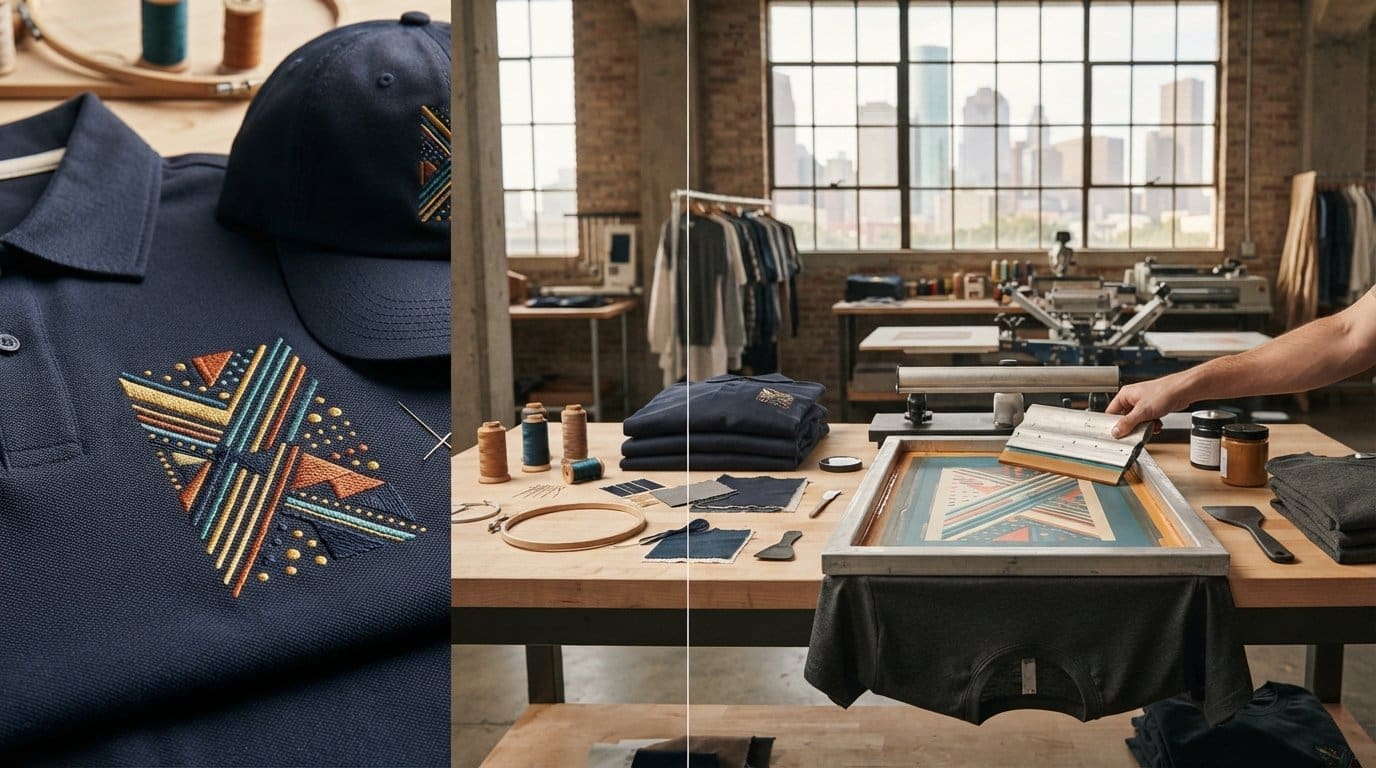
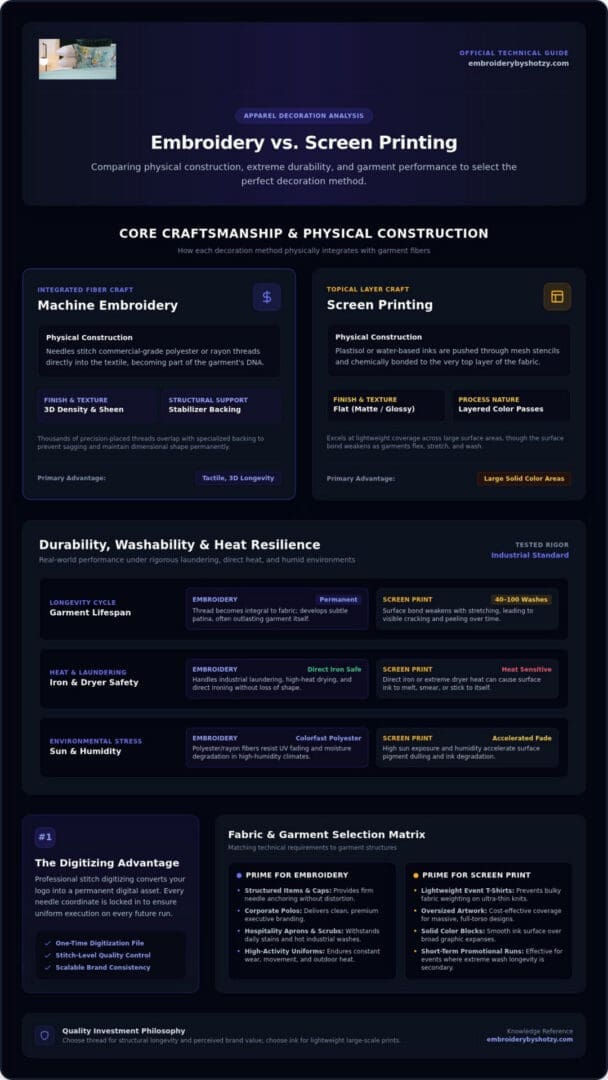
Choosing the right method for your project is about more than just picking a color; it’s about how that design lives on the fabric. Understanding what is the difference between embroidery and screen printing begins with the physical construction of the decoration. Embroidery uses needles and high-quality thread to weave designs directly into the fabric, effectively making the art a part of the garment’s DNA. It’s a three-dimensional art form that creates texture and depth, catching the light in a way that ink simply cannot. In contrast, screen printing involves pushing layers of ink through a mesh stencil onto the surface. While thread offers a professional, subtle sheen, ink provides a flat finish that can range from matte to glossy.
The Anatomy of an Embroidered Design
When you run your hand over a high-quality embroidered logo, you feel the density of the work. This solid, premium feel comes from high-stitch-count precision, where thousands of individual threads overlap to create a unified image. The process relies heavily on machine embroidery and stitch digitizing to ensure every needle drop is perfectly placed. To keep these designs crisp over years of wear, we use a specialized backing material. This stabilizer sits behind the fabric, preventing the design from sagging or losing its shape. Because we use commercial-grade polyester or rayon threads, the colors stay vibrant much longer than surface-level pigments, resisting the dulling effects of sun and repeated washing.
How Screen Printing Sits on the Surface
Screen printing works by bonding plastisol or water-based inks to the very top layer of the textile. It’s a process of layering, where each color requires its own screen and pass. This method excels when you need large, solid blocks of color, making it a common choice for lightweight event shirts where a heavy stitch might feel bulky. However, because the ink sits on top rather than being woven in, the bond is inherently temporary. Over time, as the fabric stretches and moves, the ink bond weakens. This often leads to the cracking or peeling that many people fear when ordering custom apparel. While it’s a fast way to cover a large area, it lacks the structural integrity and tactile excellence that defines a truly bespoke piece.
Durability and Longevity: Which Method Stands the Test of Time?
The Texas sun and Gulf Coast humidity present a unique challenge for any decorated garment. In a city like Houston, your apparel needs to endure more than just a standard wash cycle; it has to survive the environment. When clients ask what is the difference between embroidery and screen printing, they are often really asking about longevity. Embroidery is virtually permanent; the thread becomes part of the garment’s structural integrity. While high-quality screen prints are built to last, they eventually succumb to the elements. High humidity and constant sun exposure can accelerate ink fading, whereas polyester thread remains colorfast and vibrant through years of use. Understanding what is the difference between embroidery and screen printing helps you avoid the disappointment of a logo that disappears before the shirt does.
Washability and Heat Resistance
Embroidery is designed to handle the rigors of industrial laundering and high-heat drying without losing its shape. This makes it the essential choice for high-activity roles, such as professional embroidered scrubs or hospitality aprons that face daily stains and hot water. A major practical advantage involves heat resistance. You can iron directly over an embroidered design without a second thought. In contrast, direct heat from an iron or a high-heat dryer can ruin screen prints, causing the ink to melt, smear, or bond to itself. For Houston outdoor workers and athletes, the breathability and heat tolerance of thread provide a level of comfort that surface-level ink cannot match.
Aesthetic Aging: Patina vs. Peeling
The way a design ages tells a story about the brand behind it. As a garment naturally nears the end of its life, an embroidered monogram or logo maintains its crisp, professional look. It develops a subtle patina rather than falling apart. Screen printing, however, often shows its age through cracking and peeling after approximately 40 to 100 wash cycles. While some may appreciate the “vintage” look of a faded print on a casual t-shirt, it rarely conveys the right message for a corporate uniform or a luxury gift. Embroidery is an investment in the long-term life of the apparel. It ensures your legacy remains visible and intact as long as the fabric itself holds together.
Design Complexity and the Power of Professional Digitizing
Transforming a digital image into a physical masterpiece requires more than just a machine; it requires a specialized translation process called digitizing. When you provide a JPEG or PNG of your logo, it isn’t ready for the needle immediately. A professional digitizer must manually map out every path, density setting, and stitch angle. This creates a digital blueprint that tells the embroidery machine exactly how to move. While some might see the initial setup as a hurdle, it’s actually a long-term investment. Once your design is digitized, that file becomes a permanent asset for your brand. You can use it repeatedly for future orders of custom hats or professional polos without ever needing to pay that setup fee again.
Understanding what is the difference between embroidery and screen printing often comes down to how fine details are handled. Screen printing excels at resolving microscopic text and razor-thin lines because ink can be applied in very thin layers. However, embroidery offers a unique “pop” that ink cannot replicate. The physical thickness of the thread creates a shadow and highlight effect, giving your logo a presence that feels substantial. While thread colors are matched as closely as possible to Pantone (PMS) standards, screen printing allows for exact chemical ink mixing. For many Houston brands, the slight variation in thread color is a small trade-off for the premium, tactile excellence that embroidery provides.
When Your Logo Needs Precision
Fabric isn’t a static surface; it moves, stretches, and reacts to the needle. Professional digitizers adjust for what we call “push and pull” to ensure that circles actually stay circular once they are stitched. Without this manual intervention, a design can look skewed or puckered. We also consider the limitations of gradients. While screen printing uses half-tones to create smooth color transitions, embroidery uses blending techniques that are more artistic and textured. Often, we find that a “less is more” approach creates the most sophisticated results. Simplifying a complex logo for the needle often results in a cleaner, more authoritative brand image.
The Setup: Screens vs. Stitches
The logistical side of these methods highlights another key area where they diverge. In screen printing, a physical mesh screen must be burned and prepared for every single color in your design. If you have a five-color logo, that means five separate setups. Embroidery machines are different; they can switch between multiple thread colors seamlessly within a single design path. This flexibility is why small-batch orders in the Houston area often favor embroidery. You don’t have the high labor costs of preparing multiple screens for a small number of items, making it a highly efficient way to produce professional-grade uniforms or gifts without needing to order hundreds of units at once.
Fabric Selection: Matching Your Garment to the Right Technique
Your fabric choice acts as the foundation for your design. When deciding what is the difference between embroidery and screen printing, the weight and texture of your garment should lead the way. Heavyweight materials like canvas jackets, twill aprons, and pique polos are the natural home for embroidery. These fabrics possess the structural integrity to hold thousands of stitches without sagging. Conversely, ultra-lightweight fabrics like thin cotton t-shirts or silk often perform better with screen printing. On these delicate surfaces, the weight of the thread can cause the fabric to pull inward, creating an unsightly effect known as puckering.
Textured fabrics also play a significant role in your decision. Consider items like polar fleece, personalized baby blankets, or monogrammed towels. These materials have a high “pile” or fuzzy surface that quickly swallows liquid ink, leaving behind a patchy, unreadable mess. Thread, however, sits proudly on top of the fibers or weaves through them to showcase the design beautifully. This tactile excellence is why embroidery remains the superior choice for gifts and items meant to be touched and cherished. Understanding what is the difference between embroidery and screen printing allows you to match the method to the material for a flawless result.
The Hat Specialist Advantage
Structured headwear presents a unique challenge for any decorator. Because of their curved geometry and rigid construction, hats are almost exclusively embroidered to achieve a professional look. It’s difficult to press a flat screen onto a curved cap without the ink smearing or the design becoming distorted. Using a specialized hoop allows us to secure the garment and stitch directly into the crown with absolute precision. If you’re looking for a way to elevate your brand’s presence, choosing Embroidered Hats ensures your logo remains sharp, centered, and durable.
Polos, Scrubs, and Professionalism
The textile you choose for your team often dictates the perceived value of your organization. A screen-printed polo can sometimes look temporary or “cheap” when compared to the crisp, raised texture of a stitched logo. For those in medical environments, investing in custom embroidered scrubs is a matter of both style and practicality. The fabric used in scrubs is designed for heavy use, and the permanence of thread ensures the branding stays intact despite the rigors of medical life. While some worry about puckering on performance polyester, we utilize high-quality stabilizers to ensure the design sits perfectly flat against the chest, maintaining a sharp silhouette all day long.
Making the Decision: When to Choose Embroidery for Your Brand
The final choice for your project often rests on the story you want to tell and the impression you wish to leave behind. While both decoration methods have their specific strengths, understanding what is the difference between embroidery and screen printing helps you align your budget with your long-term goals. For many, the decision comes down to the perceived value of the finished item. Customers and employees instinctively view embroidery as a higher-end choice. It’s a tactile experience that suggests a deeper level of investment and care. When the impression needs to be lasting, the physical presence of thread often outweighs the convenience of ink.
Houston businesses frequently turn to Embroidery By Shotzy because they want a partner who treats their brand with the respect of a passionate artisan. We believe that every stitch is a reflection of your professional identity. Whether you’re ordering a dozen pieces or a hundred, the focus remains on the meticulousness of the craft. By choosing the right method, you’re not just buying a product; you’re creating a vessel for your brand’s narrative.
The Corporate and Small Business Verdict
In a professional setting, your team’s appearance is your first handshake. For uniforms that need to survive 12 or more months of daily wear, thread is the clear winner. You’ll notice that you never see a screen-printed logo on a corporate jacket or an executive’s dress shirt. This is because embroidery creates a cohesive brand story through tactile excellence and a crisp, three-dimensional finish. It signals stability and attention to detail. If your goal is to build a professional image that commands respect in a boardroom or a client meeting, the “Executive” look of a finely stitched logo is irreplaceable. It’s a small detail that makes a significant impact on how your team is perceived.
Personalized Gifts and Boutique Creations
One of the most profound answers to what is the difference between embroidery and screen printing is the ability to personalize. Screen printing is built for repetition; every shirt must be the same to make the setup worthwhile. Embroidery, however, allows for individual names or monograms to be added to each piece with ease. This makes it the only choice for boutique creations like personalized baby blankets, monogrammed towels, or custom aprons. These items often become family heirlooms, cherished for years because the decoration is as permanent as the fabric itself.
As your friendly expert, we’re here to guide you through the nuances of design translation. We help you refine your vision to ensure it looks its best when rendered in thread. To help you make the final call, consider this decision checklist:
- Quantity: Small batches and individual pieces favor the efficiency of embroidery.
- Fabric: Heavy, textured, or structured materials are the natural home for thread.
- Budget vs. Longevity: Consider if you need a temporary message or a permanent investment.
- Desired Impression: Choose the tactile richness of embroidery for a premium, professional feel.
Elevating Your Vision Through Meticulous Craftsmanship
Choosing the right decoration method is about more than just cost; it’s about the legacy you want your garments to carry for years to come. We’ve explored how thread offers a permanent, tactile excellence that outlasts even the highest quality inks. Whether you’re branding professional uniforms for your team or creating a heartfelt gift for a loved one, understanding what is the difference between embroidery and screen printing ensures your final design reflects the care you put into your work. Embroidery isn’t just a service; it’s a way to weave your story into the very fabric of your life.
Since 2014, we’ve served the Houston community as a boutique specialist, focusing on high-precision digitizing that transforms logos into lasting assets. As a passionate artisan, we provide the personalized guidance you need to navigate fabric choices and design complexities with ease. We believe every project deserves a master’s touch and an expert’s eye for detail. Ready to elevate your brand with professional threadwork? Get a Custom Quote from Embroidery By Shotzy today! Let’s bring your creative vision to life with the precision and warmth it deserves.
Frequently Asked Questions
Is embroidery more expensive than screen printing for small orders?
Embroidery is typically the more economical choice for small batches. Unlike screen printing, which requires a separate physical screen for every color in your logo, embroidery machines switch threads automatically. This eliminates the labor-intensive setup that makes small print runs expensive. For Houston teams needing just a dozen custom polos or hats, the per-item cost remains manageable because you aren’t paying for multiple screen preparations. It’s an investment in quality that fits smaller budgets.
Can any logo be converted into an embroidery design?
Most logos translate beautifully, though some adjustments are necessary for the best result. High-precision embroidery requires a minimum text height of about 0.25 inches to remain legible. Complex gradients or photographic details are often simplified into solid blocks of color or artistic blends. We work with you to refine your design, ensuring it retains its brand identity while gaining the tactile “pop” that defines professional threadwork. Simplification often leads to a more sophisticated look.
Does embroidery ever fade or wash out?
No, commercial-grade polyester thread is virtually permanent and colorfast. It’s designed to withstand industrial laundering and high-heat drying without losing its vibrancy. While screen prints may eventually crack or peel after 40 to 100 wash cycles, an embroidered logo often outlasts the garment itself. This durability is why Houston businesses choose embroidery for high-wear items like medical scrubs, aprons, and outdoor workwear that face constant sun and humidity. It’s a permanent branding solution.
What is digitizing and why is there a fee for it?
Digitizing is the technical process of converting your digital artwork into a map of instructions for the needle. It isn’t a simple “save as” function; a skilled technician must manually determine stitch angles, density, and paths. The one-time fee covers this expert labor, creating a permanent digital asset for your brand. Once your logo is digitized, you can reuse that file for all future orders without paying the setup fee again. It’s a foundational step for excellence.
Can I embroider on thin t-shirts or will it ruin the fabric?
Embroidery works best on structured, heavyweight fabrics to prevent “puckering.” On very thin t-shirts, the weight of the stitches can cause the fabric to sag or pull inward. While we use high-quality stabilizers to minimize this effect, we generally recommend choosing a garment with more “heft,” like a pique polo or heavy cotton tee. Understanding what is the difference between embroidery and screen printing helps you select the right fabric for a flawless, professional finish every time.
How many colors can I have in an embroidered logo?
You can typically include up to 15 colors in a single design without the escalating costs associated with screen printing. In the printing world, every additional color means another screen and more labor. With embroidery, the machine handles color changes seamlessly. This flexibility allows for vibrant, multi-colored logos on custom patches or bags without a significant price jump, making it easier to maintain your exact brand standards across every piece of apparel you order.
Why should I choose a local Houston embroidery shop over an online giant?
Choosing a local Houston shop like Embroidery By Shotzy means receiving personalized, boutique-style service that online giants can’t replicate. We’ve been local since 2014, giving us a deep understanding of the high-precision needs of Houston businesses. You get to collaborate directly with a passionate artisan who cares about your project’s success. We ensure your items are handled with meticulous care rather than being just another number in a massive industrial queue. Your story matters to us.
Which method is better for custom hats?
Embroidery is the undisputed industry standard for custom hats. Structured headwear has a curved, rigid surface that makes screen printing incredibly difficult and prone to smearing or distortion. Specialized embroidery hoops allow us to secure the cap and stitch directly into the fabric, creating a clean, professional look that holds its shape. Whether it’s a 3D puff design or a flat logo, thread provides the durability and dimension that hats require. It’s the mark of a truly professional brand.