Caring for Embroidered Clothing: Artisan Guide 2026
An embroidered logo or a personalized baby blanket isn’t just a decoration; it’s a three-dimensional piece of art that changes the very structure of the fabric it sits on. Because these threads are held under precise tension, treating them like a standard screen-printed tee is the fastest way to compromise a custom piece. If you’ve ever pulled a favorite polo from the dryer only to find the stitching puckering or the colors bleeding, you know the frustration. Learning how to care for embroidered clothing is essential to protect the investment you’ve made in your personal style or professional brand identity.
We believe that every stitch tells a story, and you deserve to keep that story vibrant for years to come. It’s natural to worry about “bubbling” textures or high-sheen threads losing their luster after a few cycles in the machine. This guide promises to help you master the meticulous techniques needed to preserve intricate textures and bold colors for a lifetime. We will explore the latest washing standards, the impact of the 2026 FTC labeling rules, and the artisan secrets to keeping your custom apparel looking crisp, soft, and professional.
Key Takeaways
- Understand the vital role of the stabilizer and how maintaining this structural bond prevents your custom designs from losing their shape over time.
- Master the essential steps of how to care for embroidered clothing by washing items inside out in cold water to protect thread vibrancy and prevent abrasion.
- Learn tailored preservation techniques for different pieces, from maintaining the crisp structure of hats to keeping personalized baby blankets soft and snuggly.
- Discover how to professionally address common issues like puckering or loose threads without risking the integrity of the original stitch work.
- Realize why high-quality digitizing is the foundation of durability, ensuring your logos and designs remain flat and professional for a lifetime.
Understanding the Anatomy of Your Embroidered Garment
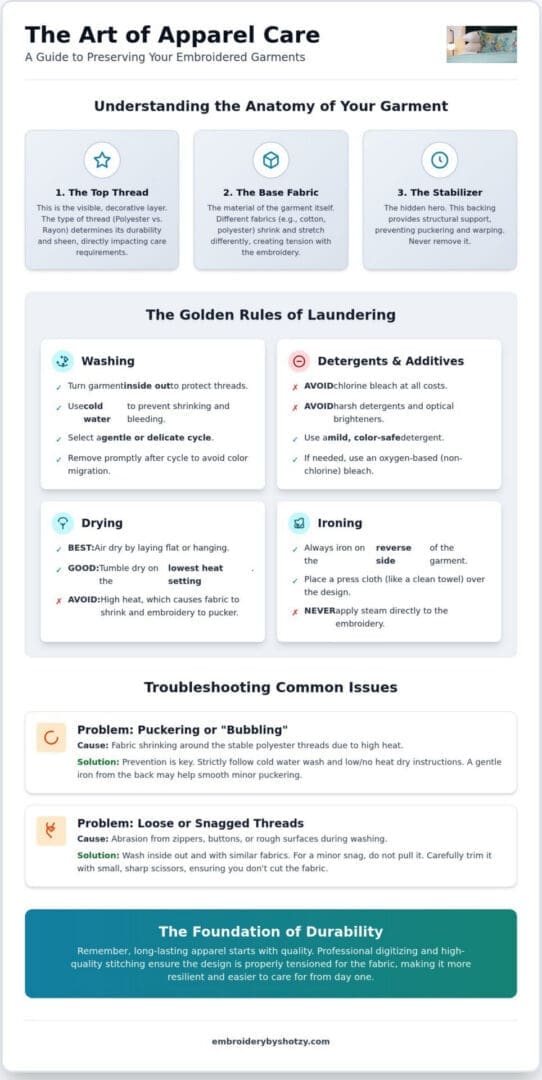
Embroidery is far more than a decorative addition; it’s a structural transformation of the garment itself. When you Learn about embroidery, you realize it creates a permanent bond between three distinct elements: the top thread, the base fabric, and the hidden stabilizer. Understanding this trinity is the first step in mastering how to care for embroidered clothing. Unlike a print that sits on the surface, these threads are pulled through the fibers under tension. This creates a lasting piece of art that requires a specific mindset when it’s time for laundry day. Every stitch is a physical link that alters how the fabric moves, breathes, and reacts to moisture.
The type of thread used determines the garment’s resilience. Most professional uniforms, like embroidered scrubs or custom polos, use polyester thread. It’s incredibly durable, colorfast, and resists the fading often caused by industrial detergents. In contrast, high-fashion items or delicate gifts like personalized baby blankets might use rayon thread. Rayon offers a stunning, silk-like sheen but is more susceptible to damage from high heat and aggressive agitation. Additionally, high stitch density makes a design feel premium, but it also makes that specific area of the fabric less flexible. This localized stiffness means the embroidered area won’t stretch or shrink at the same rate as the rest of the shirt, which is why proper handling is non-negotiable.
The Tension Balance: Thread vs. Fabric
Different materials react to water and heat at varying rates. A 100% cotton shirt might shrink significantly in a hot dryer, but the polyester embroidery threads will remain the same size. This discrepancy is the primary cause of “puckering,” where the fabric bunches up or bubbles around the edges of the design. Expert digitizing helps mitigate this by planning stitch paths that account for fabric movement and push-pull factors. However, even the most professional design can’t survive poor laundering habits. Keeping the tension balanced requires cool temperatures and gentle cycles to ensure the fabric stays as flat and crisp as the day it was stitched.
Stabilizers: The Hidden Support System
The stabilizer is the unsung hero of every custom piece. It is the specialized material on the inside of the garment that provides a firm foundation for the thousands of needle penetrations. You will typically encounter two main types:
- Cut-away: This remains permanently on the garment to provide ongoing support for the stitches, common in knits and stretchy fabrics.
- Tear-away: Often used on sturdier items like embroidered hats or bags where the fabric provides its own stability.
Never try to trim or remove this backing yourself after a wash. It’s there to maintain the integrity and shape of your design. If you cut into it, you risk the structural failure of the entire logo, leading to unravelling that no amount of repair can fix. The stabilizer is what preserves the legacy of the work through every wear.
The Golden Rules of Laundering: Washing and Drying Techniques
Protecting the artistry of your apparel begins the moment you approach the laundry basket. The most effective way to preserve the face of your design is to always turn the garment inside out before washing. This simple action creates a protective shield for the threads, preventing them from rubbing against abrasive surfaces like zippers, buttons, or heavy denim. When you are learning how to care for embroidered clothing, consistency is your best ally. By minimizing direct contact between the stitching and the machine’s agitator, you ensure the intricate textures remain as crisp as the day they were created.
Temperature control is the next pillar of successful maintenance. Always use cold water for both the wash and rinse cycles. Heat is a primary catalyst for thread bleeding and fabric shrinkage, both of which can ruin the alignment of a high-density design. Select the “gentle” or “delicate” cycle on your machine to reduce mechanical stress. Once the cycle is complete, remove the items promptly. Letting damp embroidered items sit in a heap can lead to color migration, where the dye from the thread transfers onto the surrounding fabric. This is especially important for high-contrast pieces, such as professional custom polos or vibrant corporate logos.
Choosing the Right Detergent
The chemicals you introduce to the fibers matter just as much as the water temperature. Avoid chlorine bleach and detergents with optical brighteners, as these can strip the natural luster from the threads and weaken the fibers over time. Instead, opt for pH-neutral, mild detergents designed for delicate fabrics. Be cautious with fabric softeners, particularly on performance materials like embroidered scrubs or aprons. Softeners can leave a waxy residue that traps bacteria and interferes with the moisture-wicking properties of the fabric, eventually dulling the appearance of the embroidery itself.
Drying Without Distortion
Air drying remains the gold standard for preserving the vibrancy and shape of any embroidered piece. Laying the garment flat on a clean towel allows the fibers to relax without the stress of tumbling. If you must use a machine, select the lowest possible heat setting, often labeled as Tumble Dry Low. High heat is the primary enemy of embroidery stabilizers because it causes them to become brittle or shrink, which leads to permanent puckering around the design edges. By choosing a patient approach to drying, you protect the structural bond between the thread and the garment for the long term.
Specialized Care for Your Favorite Custom Items
Every custom piece we create at Embroidery By Shotzy serves a unique purpose, and its maintenance should reflect that reality. A rugged hat meant for outdoor adventures has vastly different structural needs than a velvet-soft blanket destined for a nursery. To truly master how to care for embroidered clothing, you’ve got to look beyond the stitches and consider the garment as a whole. Tailoring your routine based on the specific item’s construction and daily use ensures that your investment remains a source of pride rather than a laundry day casualty. By treating each piece according to its individual “anatomy,” you preserve the story it was meant to tell.
Custom Hats and Headwear
Custom headwear is all about the “crown,” and its preservation requires a strict no-machine policy. Putting an embroidered hat in a dishwasher or washing machine is one of the most common mistakes owners make. The high heat and aggressive agitation can permanently warp the internal buckram, which is the stiff fabric that gives the hat its shape. Instead, stick to spot cleaning. Use a soft-bristled brush, like an old toothbrush, and a mixture of cool water and mild soap to gently work in small circles around the embroidery. Once clean, use a hat form or even a rounded kitchen bowl to support the crown while it air dries. This prevents the fabric from collapsing or wrinkling as it loses moisture.
Personalized Baby Blankets and Delicate Gifts
When you’re deciding how to care for embroidered clothing like a personalized baby blanket, softness is the top priority. These cherished keepsakes require a gentle hand to stay plush and safe for sensitive skin. To prevent the threads from snagging on zippers or hooks from other garments, always place the blanket in a mesh laundry bag before it goes into the wash. This creates a safe micro-environment within your machine. To keep the blanket’s “loft” or fluffy texture, avoid using heavy fabric softeners that can coat the embroidery threads and make them feel greasy or stiff. Focus on a light tumble on a no-heat setting or air drying to keep the monogram looking crisp and the underside smooth.
Embroidered Scrubs and Workwear
For those wearing Custom Embroidered Scrubs in Houston, your uniform is a badge of professional identity. These items face heavy-duty use and frequent laundering, but that doesn’t mean they should look worn out. Avoid the temptation to use industrial-strength bleaches or harsh detergents, as these will strip the luster from your logo and eventually weaken the fabric-to-thread bond. If you’re dealing with a tough stain, apply a pre-treatment to the fabric only. Never scrub the embroidered area directly with a brush, as this creates “fuzzing” that makes a professional logo look neglected. By treating your workwear with an artisan’s eye, you ensure your branding stays sharp through every shift.
Troubleshooting Common Issues: Puckering, Fading, and Stiffening
Even with meticulous laundering, your custom pieces may eventually face structural or aesthetic challenges. The most frequent complaint is “puckering,” those frustrating bubbles that form around the edges of a design. While we established earlier that this often stems from fabric shrinkage, you can frequently resolve it through proper pressing. If you encounter a loose thread or “bird-nesting” on the underside, resist the urge to pull. Pulling a single thread can compromise the entire lockstitch, leading to a rapid unravelling of the design. Instead, use sharp embroidery snips to trim the thread as close to the base as possible. Understanding these small nuances is a key part of how to care for embroidered clothing and maintaining its artisan quality.
Thread luster can also fade over time, especially if the fibers have been exposed to harsh minerals or sun. If your vibrant threads begin to look dull, it is often due to a buildup of microscopic residue rather than actual color loss. A gentle rinse in a mixture of cool water and a tablespoon of white vinegar can help dissolve these deposits and restore the original sheen. This method is particularly effective for high-sheen rayon threads that have lost their “pop” after multiple wears. Taking these extra steps ensures the physical reality of your garment continues to match your original vision.
Ironing and Pressing Techniques
Heat can be a tool for restoration or a weapon of destruction. Rule number one is to never iron directly on the embroidery threads; the high heat can melt polyester or scorch delicate rayon. Always turn the garment inside out and iron on the reverse side. For an added layer of protection, place a pressing cloth, such as a thin cotton towel, between the iron and the fabric. This distributes the heat evenly and prevents the “shiny” marks that occur when an iron compresses the thread fibers too aggressively. Use steam sparingly on rayon threads, as excessive moisture combined with heat can cause the fibers to swell and distort the stitch tension. If you want to ensure your next project is built with this level of durability in mind, consider the high-stitch-count excellence of Embroidery By Shotzy.
The Houston Factor: Humidity and Hard Water
Living in Houston introduces unique environmental variables that affect how to care for embroidered clothing. Our notorious high humidity can trap moisture within the dense layers of a design’s stabilizer, leading to mildew if the garment isn’t dried completely. Always ensure your embroidered items have ample airflow during the drying process. Additionally, Houston’s hard water contains minerals that can make threads feel “crunchy” or stiff over time. To mitigate this, consider using a water softener in your wash or performing the vinegar rinse mentioned above. When your items are clean and dry, store them in a climate-controlled environment rather than a damp garage or attic to preserve the integrity of the stabilizers and the vibrancy of the threads.
Why High-Quality Digitizing and Stitching Make Care Easier
The lifespan of your favorite custom polo or baby blanket isn’t solely determined by your laundry habits. It is actually decided before the first needle ever touches the fabric. High-quality digitizing serves as the blueprint for durability. When a design is professionally digitized, the artist plans the stitch paths to account for the natural “push and pull” of the embroidery machine. This technical foresight is the secret to preventing the structural pulling that often leads to post-wash puckering. If the foundation is flawed, knowing how to care for embroidered clothing can only do so much to hide those initial defects.
Many industrial shops prioritize speed over precision, using generic settings that don’t account for specific fabric types. This “cheap” high-speed approach often results in designs that look great on the rack but fail after a few wash cycles. At Embroidery By Shotzy, we take a boutique approach. We believe every project is a partnership. Our commitment to meticulousness means we adjust every stitch to ensure it survives the realities of daily wear and tear. By investing in quality from the start, you ensure that the physical reality of your garment remains true to your original vision.
Precision Stitching: Built to Last
Optimal stitch counts are a delicate balance between visual beauty and structural integrity. Too few stitches leave gaps that snag, while too many create a rigid “patch” that forces the surrounding fabric to bunch up. As a local Houston expert, we understand how our regional climate and frequent washing cycles impact the life cycle of your garment. By utilizing Professional Digitizing Services, you are investing in a design that remains supple and professional. We don’t just create a logo; we build a structural bond that respects the movement of the fabric, making it much easier for you to maintain over time.
Creating Your Next Legacy Piece
We invite you to view your next project as more than just a service transaction. Whether it’s a set of embroidered scrubs for your medical team or a personalized baby blanket for a new family member, these items are vessels for stories and professional legacies. When craftsmanship is handled with this level of personal investment, the amount of effort you need to put into how to care for embroidered clothing is significantly reduced. A well-built piece is naturally more resilient to the stresses of the washing machine. If you’re ready to see your vision brought to life with technical precision and creative warmth, Start your custom embroidery project with Shotzy today. Let’s create something that truly lasts a lifetime.
Preserving Your Legacy in Every Stitch
Your custom apparel is more than just fabric and thread; it’s a physical vessel for your professional story or personal milestones. By mastering the nuances of how to care for embroidered clothing, you ensure those stories remain vibrant and intact for a lifetime. From the initial bond between the thread and the stabilizer to the gentle touch of a cold water wash, every step you take protects the meticulous craftsmanship that defines your favorite pieces. Taking a patient, artisan-led approach to maintenance keeps your designs looking crisp while preventing the common pitfalls of puckering and fading.
True durability begins with a creator who understands the intersection of technical precision and personal connection. With over 10 years of experience as a local Houston boutique, we specialize in advanced digitizing that makes your garments resilient from the very first stitch. We invite you to bring your vision to life with a partner who values the lasting impact of quality work and individual excellence. Our boutique approach ensures that every scrub, hat, or blanket is built to survive the realities of daily life.
Preserve your brand with professional embroidery—Contact Shotzy in Houston
Take pride in your collection, knowing that with the right care and a foundation of excellence, your custom pieces will continue to look professional for years to come.
Frequently Asked Questions
Can I machine wash embroidered clothing?
Yes, most items are machine washable if you use a gentle cycle with cold water. It’s critical to turn the garment inside out to protect the thread faces from friction against the machine drum or other clothes. This practice is a cornerstone of how to care for embroidered clothing, especially for high stitch count designs like those found on professional polos or scrubs. Always choose a mild detergent to keep the fibers strong.
How do I stop my embroidery from puckering after washing?
Puckering usually happens when the base fabric shrinks more than the polyester thread. To prevent this, always wash in cold water and avoid high heat drying. If puckers appear after a wash, iron the garment on the reverse side using a pressing cloth. This helps relax the fabric fibers around the stable embroidery stitches without damaging the design’s structural integrity or causing the threads to melt.
Is it safe to dry clean embroidered items?
Dry cleaning is generally safe for most embroidered apparel, but you should always check the garment’s care label first. Professional cleaners are experienced with the tension between different materials. However, for delicate items like personalized baby blankets, a gentle home wash is often preferred. This keeps the fabric soft and free of the harsh chemical residues sometimes associated with industrial dry cleaning processes.
What should I do if a thread starts to pull or come loose?
Don’t pull the thread, as this can cause the entire design to unravel. Instead, use a pair of sharp embroidery snips to trim the loose end as close to the fabric as possible. If the pull is large, you might need a professional repair to secure the lockstitch. Most small snags can be managed safely at home with a careful trim, preventing further damage to the design.
Can I use bleach on a white shirt with a colored embroidered logo?
Avoid using chlorine bleach, even on white garments with colored embroidery. Bleach can strip the color from the threads or weaken the fibers, leading to premature fraying and a dull appearance. If you need to brighten the white fabric, use an oxygen based bleach or a targeted spot treatment. Keep the product away from the embroidered area as much as possible to preserve the logo’s vibrancy.
How do I wash an embroidered hat without it losing its shape?
Never put an embroidered hat in a washing machine or dishwasher. Spot clean the fabric using a soft brush and cool, soapy water, then rinse carefully. To maintain the crown’s shape, place the hat over a rounded object like a bowl or a hat form while it air dries. This ensures the internal stiffeners don’t collapse or warp, keeping your headwear looking professional and crisp.
Should I iron my embroidered items?
You can iron them, but never apply a hot iron directly to the embroidery threads. Always iron the garment inside out and use a thin pressing cloth between the iron and the fabric. This protection prevents the threads from melting or becoming flattened. Use a low to medium heat setting to safely remove wrinkles while keeping the design’s three dimensional texture and artisan quality intact.
What is the best way to remove a stain near an embroidered design?
Use a targeted spot treatment and apply it carefully with a soft cloth. Avoid scrubbing the embroidered area itself, as this can cause the threads to fuzz or lose their natural luster. Gently blot the stain from the outside in to prevent it from spreading into the thread work. This careful, methodical approach is a vital part of learning how to care for embroidered clothing effectively.